
Dear Rice colleagues,
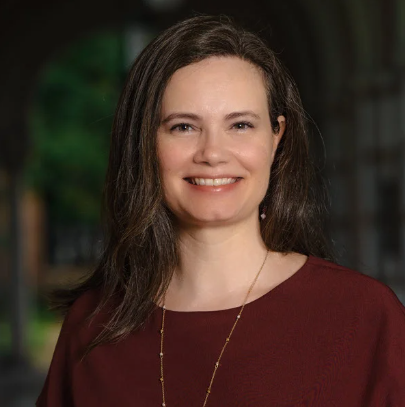
I’m pleased to share that Rachel Kimbro has been reappointed as dean of the School of Social Sciences. Rachel has been an excellent partner leading the school and its significant role in advancing our Momentous research goals to build thriving urban communities, lead health innovations and generate sustainable futures, in addition to advancing premier teaching.
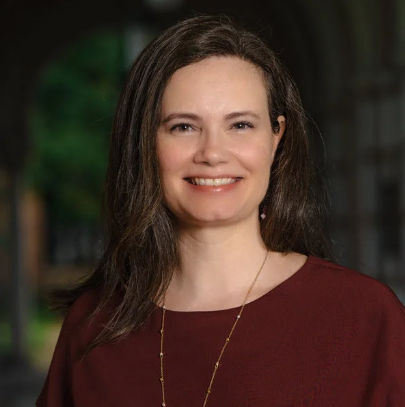
In her first term as dean, Rachel significantly grew the faculty, expanded research infrastructure, enhanced student programs and financial support, raised philanthropic funds to support key initiatives and bolstered the school’s reputation through strategic marketing and communications efforts.
Rachel, a Rice undergraduate alumna and parent of a Rice alumna and current student, is a passionate advocate for the university and its School of Social Sciences. In her five-year tenure, she oversaw a 22% increase in tenure-track and tenured faculty and invested heavily in dedicated, experienced lecturers and teaching professors. Her efforts brought the total of tenure-track and tenured faculty to 112 in fiscal year 2026 and increased the number of promotable teaching professors, with hiring in every department in the school. Several new hires are in the Center for African and African-American Studies, a collaboration with the School of Humanities and Arts and a unique hub for conversations on crucial topics related to race, racism and identity and the complexity of Africa’s past, present and future, and are directors of centers in the Kinder Institute for Urban Research, which advances solutions to Houston’s biggest challenges.
With an eye for enhancing Social Sciences’ research profile, Rachel created a new position, the school’s first associate dean for research, who helps faculty secure external funding. Notably, internal funding through the Social Sciences Research Institute dramatically increased and graduate student research funding more than doubled.
Under Rachel’s leadership, the number of faculty winning prestigious National Science Foundation CAREER awards grew from one in fiscal year 2022 to six in fiscal year 2025. In collaboration with others, the school supported the launch of two research institutes, the Institute of Health Resilience and Innovation and the Rice Brain Institute, and four research centers: Advancing Linguistic Science; Coastal Futures and Adaptive Resilience; Computational Insights on Inequality and Society; and the Rice Center for Voting.
Rachel also launched new academic programs, including an undergraduate major in sport analytics in collaboration with the School of Engineering and Computing, a master’s in computational economics and a global affairs undergraduate major, developed in close collaboration with the School of Humanities and Arts. These complement the master’s programs in energy economics, global affairs, social policy evaluation, industrial-organizational psychology and human-computer interaction and human factors. The school recently graduated its largest number of master’s students. The STaRT@Rice annual methods training program has trained hundreds of current and prospective graduate students in statistical training and research techniques.
In addition, Rachel expanded undergraduate opportunities for experiential learning with new professional practica in community health and public service, building upon the popular consulting and banking and finance practica. A new faculty-led immersion program, Journey Towards Justice, combines traditional classroom instruction with immersive, on-the-ground experiences that challenge students to engage emotionally, intellectually and historically with the civil rights movement. These experiences are supported by the Frances Anne Moody-Dahlberg Gateway Program, made possible by the Moody Gift for Student Opportunity.
To support the school’s growth, Rachel has added staff in key roles, which enable the school to engage more robustly with alumni and supporters and recruit more students to its master’s programs. She also revitalized the Social Sciences Advisory Board by recruiting more alumni members representing various career paths and generations.
All of these initiatives and efforts have the School of Sciences and its community well positioned for continued growth and impact in the years ahead.
Please join me in congratulating Rachel and thanking her for her leadership and partnership as she embarks on her second term.
Warm regards,
Amy Dittmar, Howard R. Hughes Provost and Executive Vice President for Academic Affairs